
Moissanite Collection
Moissanite Collection
In This Guide
Fancy color moissanite are authentic moissanite gems created by Sotiya. The fancy colors are created through a special heating process with ion induction displaying beautiful colors on the surface of the gem.
At sotiya, there is a large selection of colored moissanite, ruby, blue, pink, white and yellow sapphire, emerald, mother-of-pearl green, variscite, and aquamarine spinel to choose from.
These stones have the same physical, chemical and optical properties as the mined stones. sotiya does not “make” the stones, but controls the environment so that the crystals can grow naturally: recreating the conditions under which the stones would grow in the earth.
Each rough gemstone is then carefully oriented, perfectly cut and hand polished. By sacrificing 80% of the rough crystals, their master gem cutters produce and select only the best stones in terms of color and clarity.
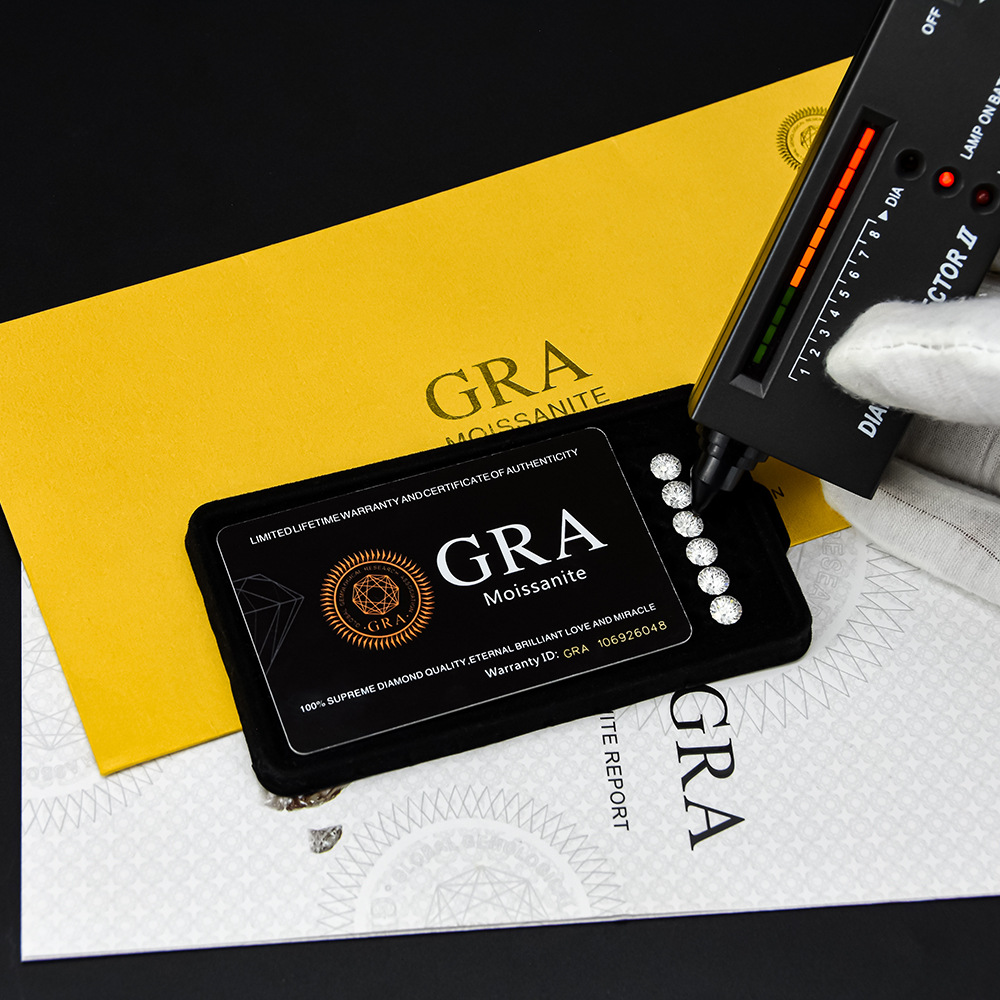
A certificate that specifically identifies the color, texture and weight of moissanite diamonds.
.jpeg?w=1080&h=1080)
Artisans with thirty years of jewelry experience create perfect jewelry for Sotiya. Ensuring that the shape and cut of each moissanite is the ultimate in perfection.
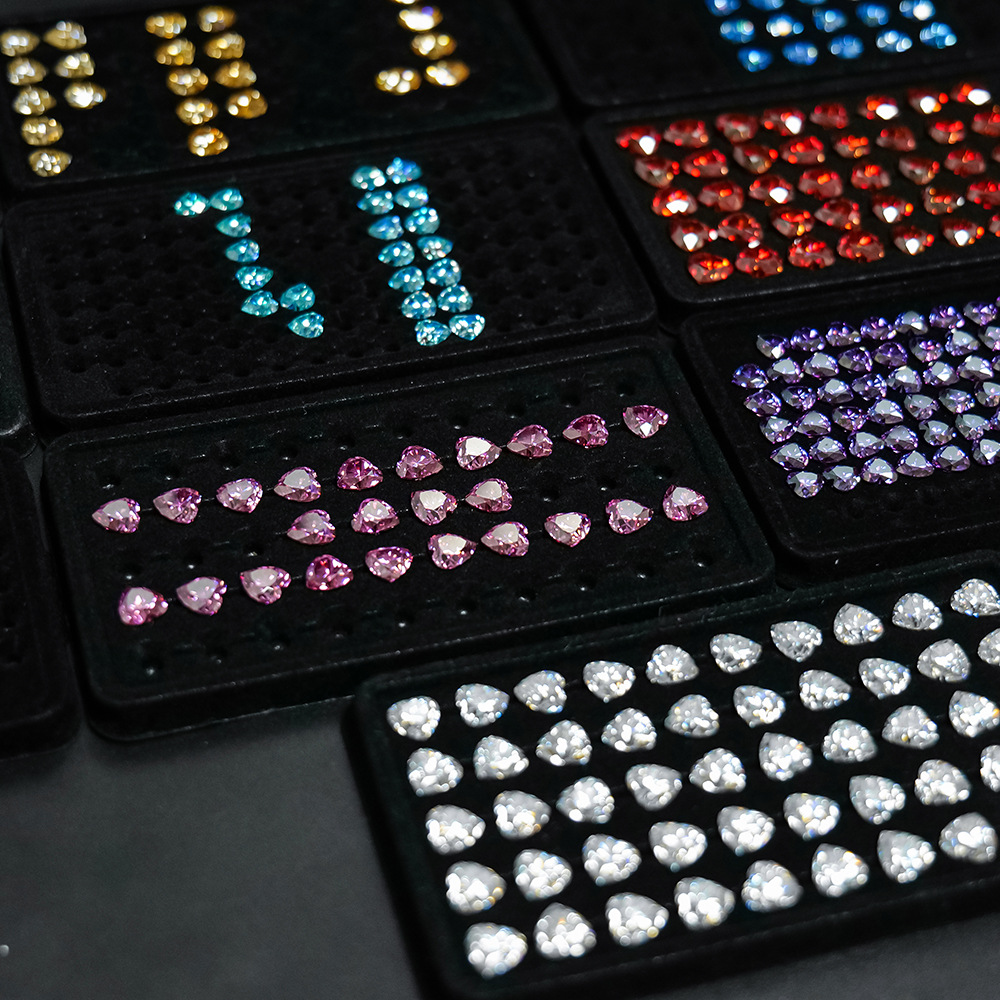
Not just the usual white moissan, we are constantly developing more colorful and superior colored moissan jewelry.
A certificate that specifically identifies the color, texture and weight of moissanite diamonds.
Artisans with thirty years of jewelry experience create perfect jewelry for Sotiya. Ensuring that the shape and cut of each moissanite is the ultimate in perfection.
Not just the usual white moissan, we are constantly developing more colorful and superior colored moissan jewelry.
What Is Moissanite?
Benefits of Moissanite Made, not mined.
Environmentally friendly, because Moissanite is lab grown, not mined..
Moissanite is less expensive per carat than many other gemstones.
Moissanite is a 9.25-9.5 on the Mohs Scale of Hardness, so it is suitable for everyday wear.
Simulates a perfect diamond and even cuts glass.
D color (completely colorless).
IF clarity (Internally flawless).
Environmentally friendly, because Moissanite is lab grown, not mined..
Moissanite is less expensive per carat than many other gemstones.
Moissanite is a 9.25-9.5 on the Mohs Scale of Hardness, so it is suitable for everyday wear.
Simulates a perfect diamond and even cuts glass.
D color (completely colorless).
IF clarity (Internally flawless).
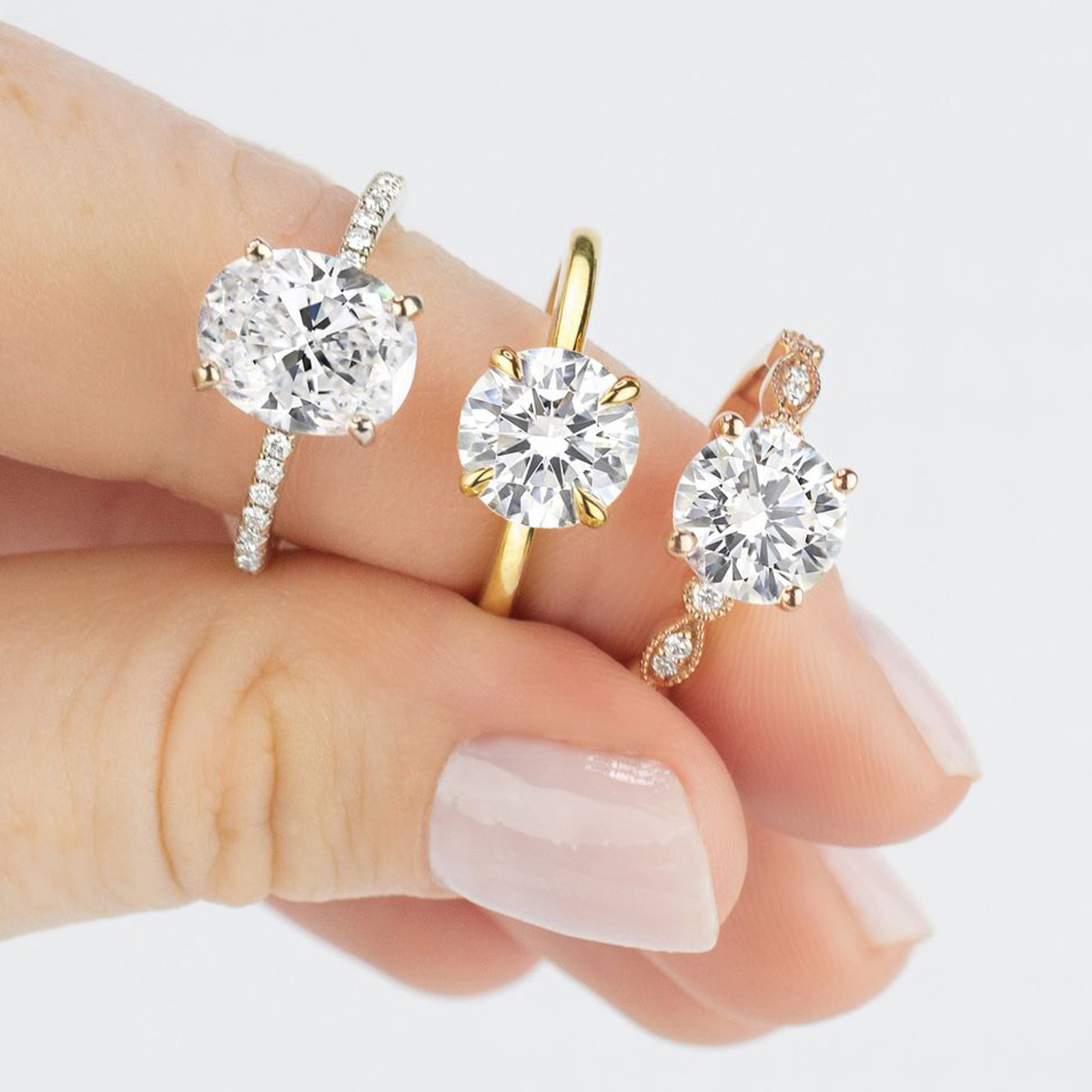
Moissanite has a different chemical makeup from natural and lab grown diamonds. While a diamond is pure carbon, moissanite is both silica and carbon. As a result, Moissanite sparkles differently, more even, and is slightly less hard than a diamond. However, it does look nearly identical to a diamond!
Is a Moissanite a Diamond?
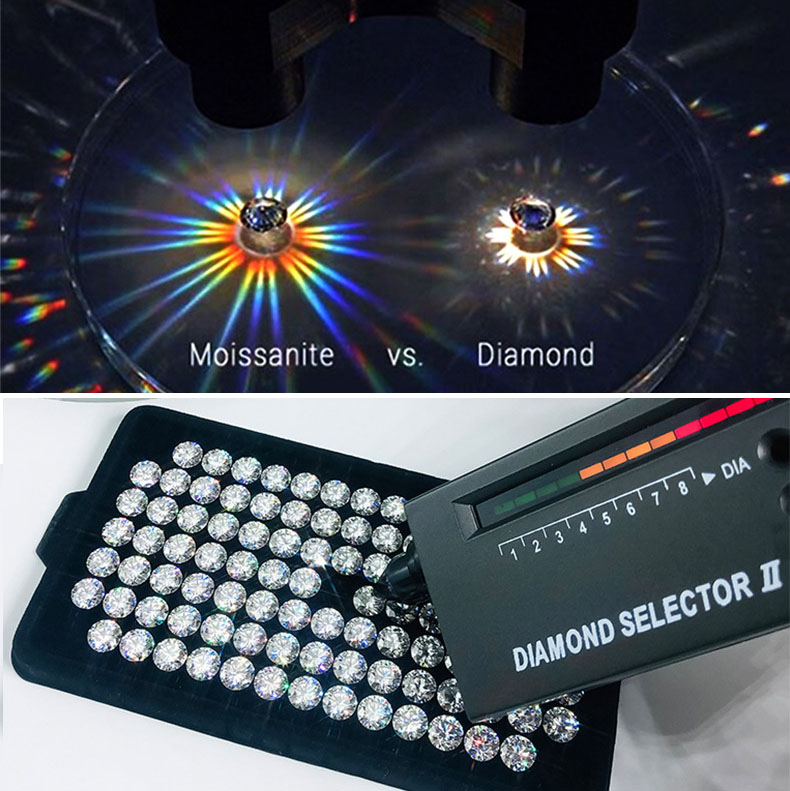
No, a moissanite is not a diamond. Professionals grow them in laboratories because they are visually similar to diamonds, but compositionally they’re quite different. Diamonds are composed of carbon and moissanites are composed of silicon carbide.
While the untrained eye may visually perceive a moissanite as similar to a diamond, it has a higher refractive index — meaning it produces more rainbow ‘fire’ than a diamond when light hits the stone’s surface. Diamond is also physically harder than moissanite, which is a 9.25 on the Mohs hardness scale compared to a diamond’s rating of 10.
While they both feature dispersion, scintillation, and are both considered to be good thermal conductors, moissanites and diamonds are otherwise distinct.
Moissanite vs. Diamond
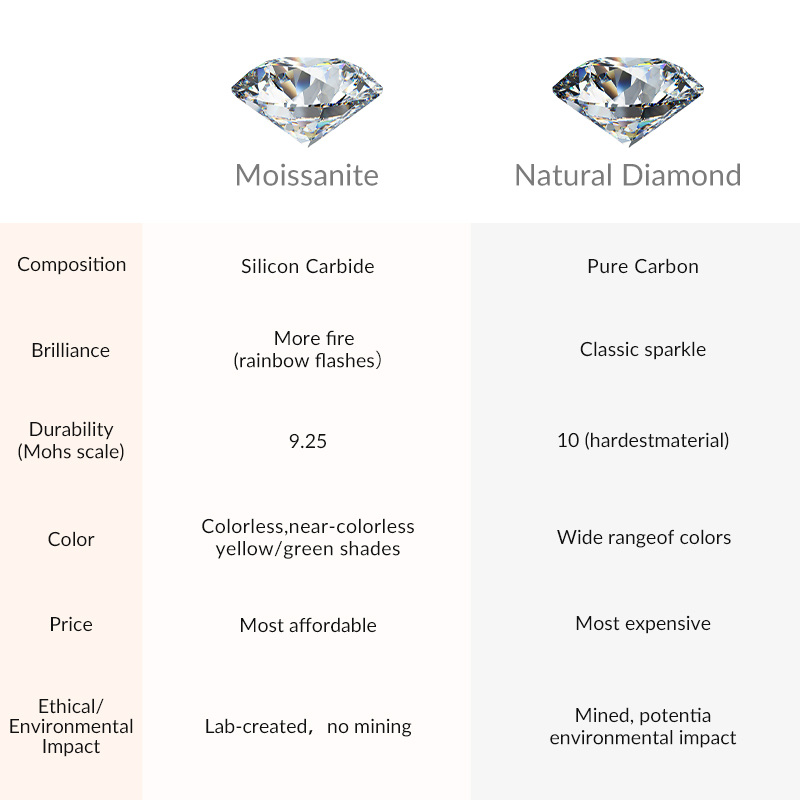
Because they are grown in controlled environments using advanced technology, moissanites require absolutely no mining to produce. Compared with natural gemstones, Moissanites have a smaller carbon footprint and result in less environmental impact. Fine jewelry made with moissanites is a responsible choice.
Moissanite gemstones are colorless (graded D, E, or F), of high clarity (VS1 or better), and are manufactured to an Excellent Cut. Moissanite is less susceptible to cracking and chipping than a diamond as it has greater tensile strength and is less brittle than diamond.
How to Tell a Moissanite From a Diamond
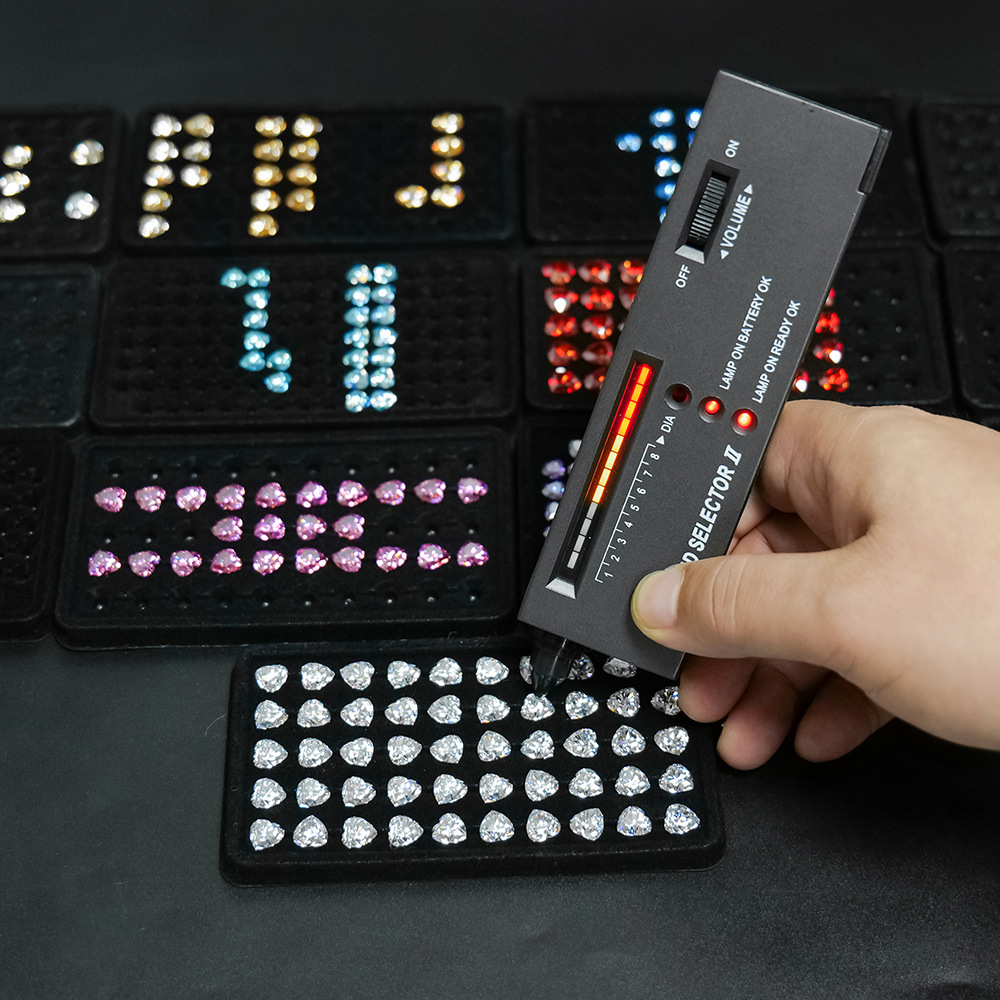
If you are not trained in the differences between diamond and moissanite, telling the difference can be difficult.
The best way to tell the difference is to line up two similarly sized gemstones, one moissanite, and one diamond, and compare them side-by-side. The distinct sparkle of a diamond is a unique combination of reflected light, the colors that refract through it, and its scintillation. While moissanite exhibits light reflection, color refraction, and scintillation, it also features more than two times the amount of 'fire' than diamonds, meaning it shows more intense flashes of rainbow light than diamonds. This 'disco ball' effect, which is more prominent in moissanite with larger carat weights, is the best way to quickly distinguish between moissanite and diamond.
Color
Moissanite comes in colorless, near-colorless, and yellow/green shades. This is perfect if you’re looking for a more traditional-looking center stone. On the other hand, natural and lab diamonds come in every color under the rainbow. You will have no trouble finding an affordable white diamond or a fancy color diamond.
Origins
Moissanite is produced in a safe laboratory environment and does not involve destructive mining. Natural diamonds, however, are made by the earth. They are mined from every continent on the globe.
Durability
A gemstone’s durability is measured using the Mohs hardness scale. FYI, diamonds are the hardest substance on earth, rating a 10 on the Mohs hardness scale!
Moissanite doesn’t do too badly either, coming in a close second at 9.25 on the scale. This means your moissanite ring will remain clear and unscratched. In fact, the only thing hard enough to scratch it would be a diamond.
Tips on Selecting a Moissanite
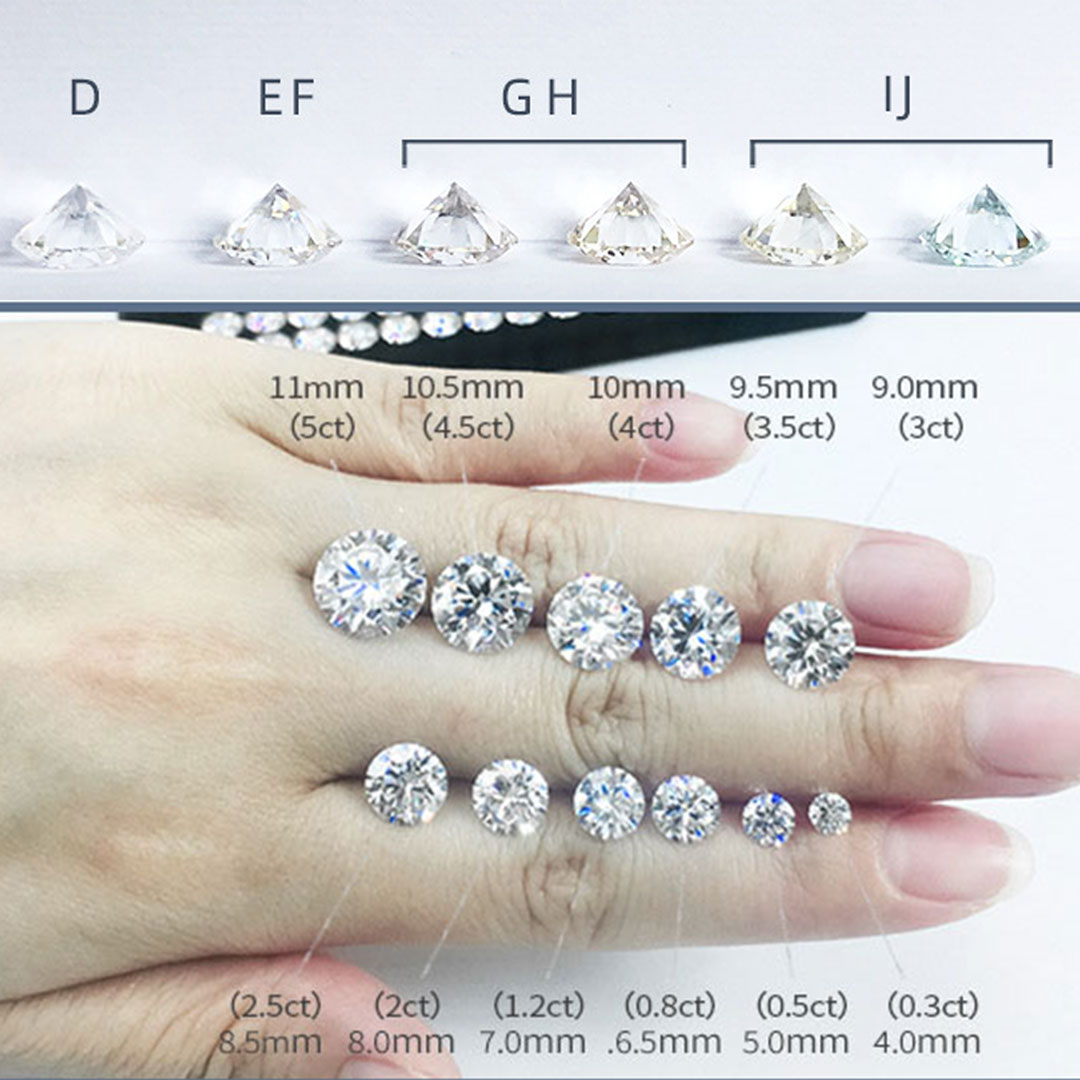
While shopping for a moissanite is not unlike shopping for any other gemstone, there are a few things to keep in mind.
Unlike diamonds that are graded by independent institutions on cut, color, clarity, and carat, moissanites are reviewed only for cut, color, and clarity. Then, at Sotiya, they’re categorized by their color and rated as Premium or Super Premium. A Premium moissanite is similar to a G-H color diamond, while a Super Premium moissanite is in the D-E-F range. As the technology to create a moissanite is so advanced, there is very little variation in their quality.
Lastly, it’s most important to consider if moissanite is the right gemstone for you. To come to a conclusion, think about its difference from diamonds (its fire, scintillation, price, and durability) to determine if it’s your ideal fit.
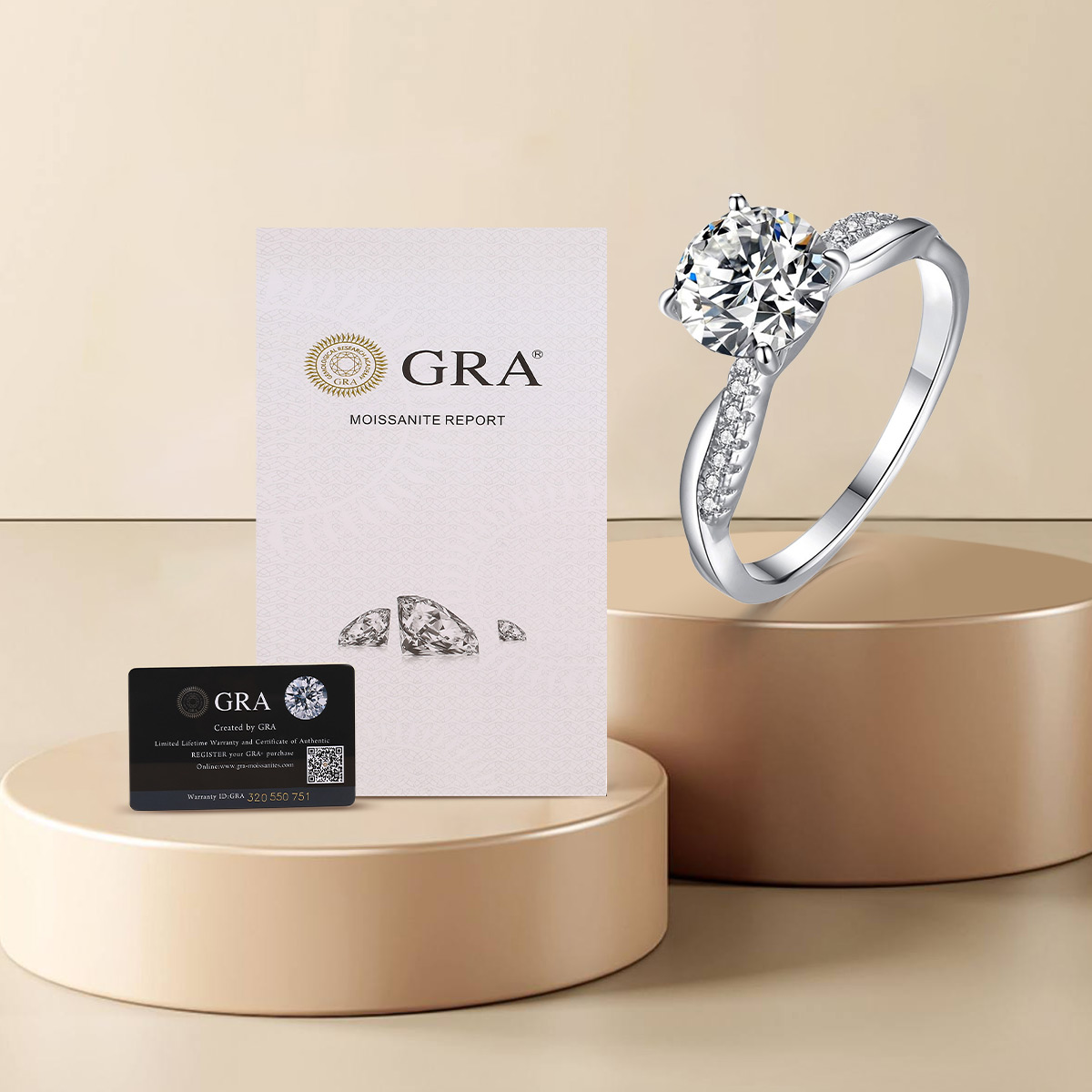
GRA - The Global Standard of Excellence for Gemstone and Fine Jewelry Appraisals
Our moissanites are certified by the Global Gemological Research Academy, which has been the standard of excellence for gemological services worldwide since 1993. These reports have proven to be an internationally recognized passport to gemstones.


